 Client Portal
Akil Ali Consulting PartnersBuilding stronger, more physically resilient workforces.
Powered by MR-CAS™
Client Portal
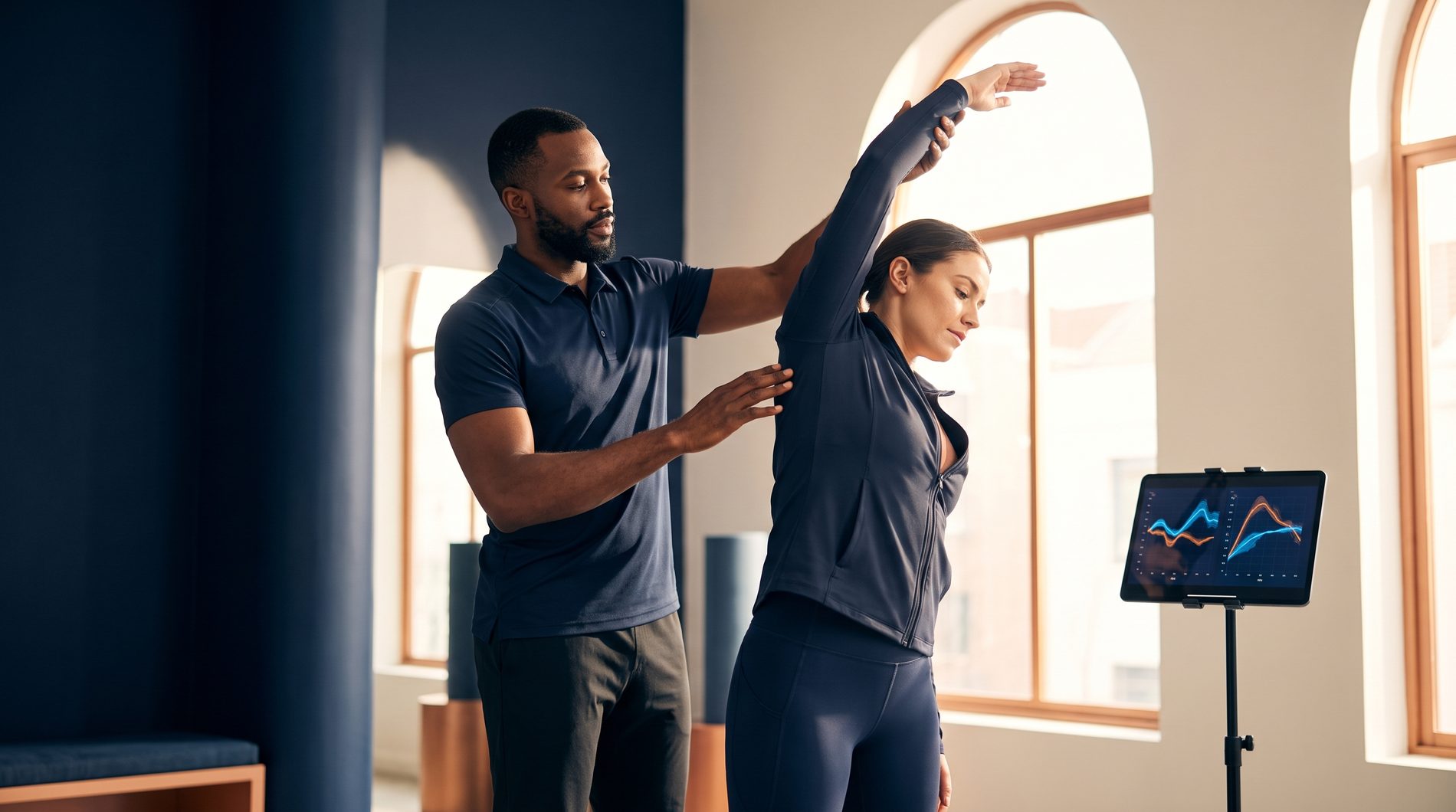
Every job places demands on the body. Sitting for long hours. Repetitive work. Lifting. Driving. Travel. Standing. Physical labour. Fatigue.
Over time, employees lose the physical capacity to comfortably handle those demands — long before the problem is serious enough to appear as an injury, an absence or a medical case. MR-CAS™ finds those gaps earlier, and gives you something to do about them.
Illustrative. Individual results stay confidential — leadership sees anonymised patterns by employee group, in the same register format already used for financial and operational risk.
MR-CAS stands for the Musculoskeletal Risk & Capacity Audit System — a structured system developed by Akil Ali Consulting Partners to measure physical capacity, show where limitations sit, support employees with targeted work, reassess what changed, and report the pattern to leadership.
The consultancy you contract with — discovery, programme design, delivery, reporting and executive advice.
The method that runs inside it: measure physical capacity, compare it with what the work demands, act on the gap, and measure again.
MR-CAS applied to one organisation — built around your roles, sites and working conditions.
MR-CAS is preventative and non-diagnostic. We are not diagnosing employees — we are measuring physical capacity before limitations become harder to manage.

From logistics and manufacturing to field operations, work asks the body to move, lift, hold and repeat — day after day. MR-CAS makes those demands, and the capacity to meet them, visible.
Companies know what their jobs demand. Very few know whether their people have the physical capacity to meet those demands.
Every employee brings a level of physical capacity to work. Every job places a level of work demand on them. Where capacity comfortably exceeds demand, people carry reserve. Where demand repeatedly exceeds capacity, fatigue, discomfort and physical limitation take hold — usually invisible until they surface as injury or absence.
Most organisations don't see physical decline until an employee is already struggling. Occupational health, safety, ergonomics, fitness and wellbeing all matter — but one question stays unanswered: what can this employee's body actually do today, and how does that compare with what their work repeatedly asks of it? MR-CAS exists to answer it. The cost isn't pain; the cost is volatility.

Scope is set per workforce. A full audit covers six areas — what the body can do, how well it controls it, what the job asks, and what is left in reserve at the end of the day.
The wider the gap, the higher the priority. MR-CAS measures it, and measures it again after you act.
For readers who want the technical layer: MR-CAS is built on Functional Range Assessment (FRA) from Functional Range Systems®, producing joint-by-joint capacity scores for usable range, control and load tolerance. Work-demand mapping sets these against the real requirements of the role. Where appropriate, infrared thermography adds a non-diagnostic physiological signal, and FRSISM™ capacity sessions form the intervention layer. Together these make up the Executive Movement Audit™.
Thermography is used as a supporting signal only. It is not a diagnostic imaging service and is not used to identify medical conditions.
A repeatable loop that turns individual assessment into decisions leadership can act on — and then checks whether those decisions worked.
We map the roles, working conditions and physical demands of the group being assessed.
Selected employees complete a structured physical-capacity assessment.
We compare what the employee can currently tolerate with what the work requires of them.
Employees receive practical guidance and targeted capacity-building support.
We measure again, so the change is evidenced rather than assumed.
Individual results stay confidential. Leadership receives anonymised workforce findings, trends and recommendations on a set cadence.
Measure → Understand → Act → Reassess

MR-CAS is educational, supportive and practical. Employees learn what their body can do, where the limitations sit, and exactly what to do about them — knowledge they keep long after the programme ends.
A system-led firm — not a single service. Every engagement is built around your organisation, and runs on MR-CAS.

Practical and engaging, built around real job demands — not a generic fitness class. Employees leave understanding their own movement and what to do about it, and managers gain a clearer view of their team's physical resilience.
Assess selected employee groups, identify the physical-capacity patterns across them, and give leadership clear workforce-level findings.
Assessment, employee education, targeted movement interventions and reassessment — combined and run over an agreed period.
Private assessment and capacity programmes for executives, leaders and high-travel professionals, delivered discreetly.
Practical education for employees and managers on physical capacity, movement, recovery and staying physically resilient.
Where physical-capacity management fits alongside your existing occupational health, safety, ergonomics and wellbeing provision — and how to govern it.

You don't need hundreds of pages of employee data. You need to know: where are the problems, which groups need attention, which capacities are repeatedly limited, where should resources go — and did the intervention make a difference?
This is where MR-CAS becomes governance rather than a one-off report. Findings are presented on a fixed reporting cadence, in the same register format your board already uses for financial and operational risk — so physical capacity is reviewed, owned and re-measured like any other managed risk.
See physical-capacity patterns while they are still patterns — not once they have become injury, absence or formal restriction.
Direct education and intervention toward the groups and capacities that need them most.
People get relevant, personal, practical information about their own bodies — so participation is willing rather than mandated.
Baseline and reassessment data show participation, change and outcomes — evidence, not assertion.
Sits alongside your existing occupational health, wellbeing, fitness, ergonomics and safety provision.
Employees build the physical capacity to handle the work — and the rest of their lives — with more in reserve.
MR-CAS delivers visibility, better-targeted resources, employee support and measurable programme outcomes. It does not make financial promises it cannot evidence.
MR-CAS adapts to very different working environments — but the question underneath stays the same in all of them.
Energy · Oil & Gas · Utilities · Mining · Construction · Manufacturing · Logistics · Aviation
Where employees face repetitive work, lifting, standing, driving and handling.Financial Services · Professional Services · Law · Corporate Offices · Leadership Teams
Where long hours, sitting, travel, stress and low movement create a different kind of physical demand.Founders · Boards · High-travel professionals
Where schedule, travel and responsibility make physical resilience directly commercial.Different jobs. Different demands. Same question: is this person's physical capacity keeping pace with what is being asked of them?
Corporate wellness asks: "what can we offer employees?" MR-CAS asks a different question: "does our workforce have the physical capacity to handle the work we are asking them to do?" That changes the conversation.
We are not replacing your wellbeing programme, your occupational health provision, your physiotherapy or your ergonomics. We fill the space between general wellness and clinical care — where physical limitations are already developing but have not yet become medical cases. Ergonomics adjusts the furniture; MR-CAS measures and governs the capacity of the person using it.
Employees receive their own assessment, their own findings and their own recommendations. Leadership receives group-level trends, priority areas, programme outcomes and strategic recommendations — nothing that identifies an individual, unless a different process has been explicitly agreed, legally reviewed and consented to.
Clear consent and communication before any employee takes part.
Personal findings stay with the employee, handled securely.
Organisations see workforce patterns, not identifiable individuals.
MR-CAS is preventative. It is not a medical diagnostic service.
Data-governance protocols applied throughout the programme.
Clinical concerns are directed to regulated healthcare providers.
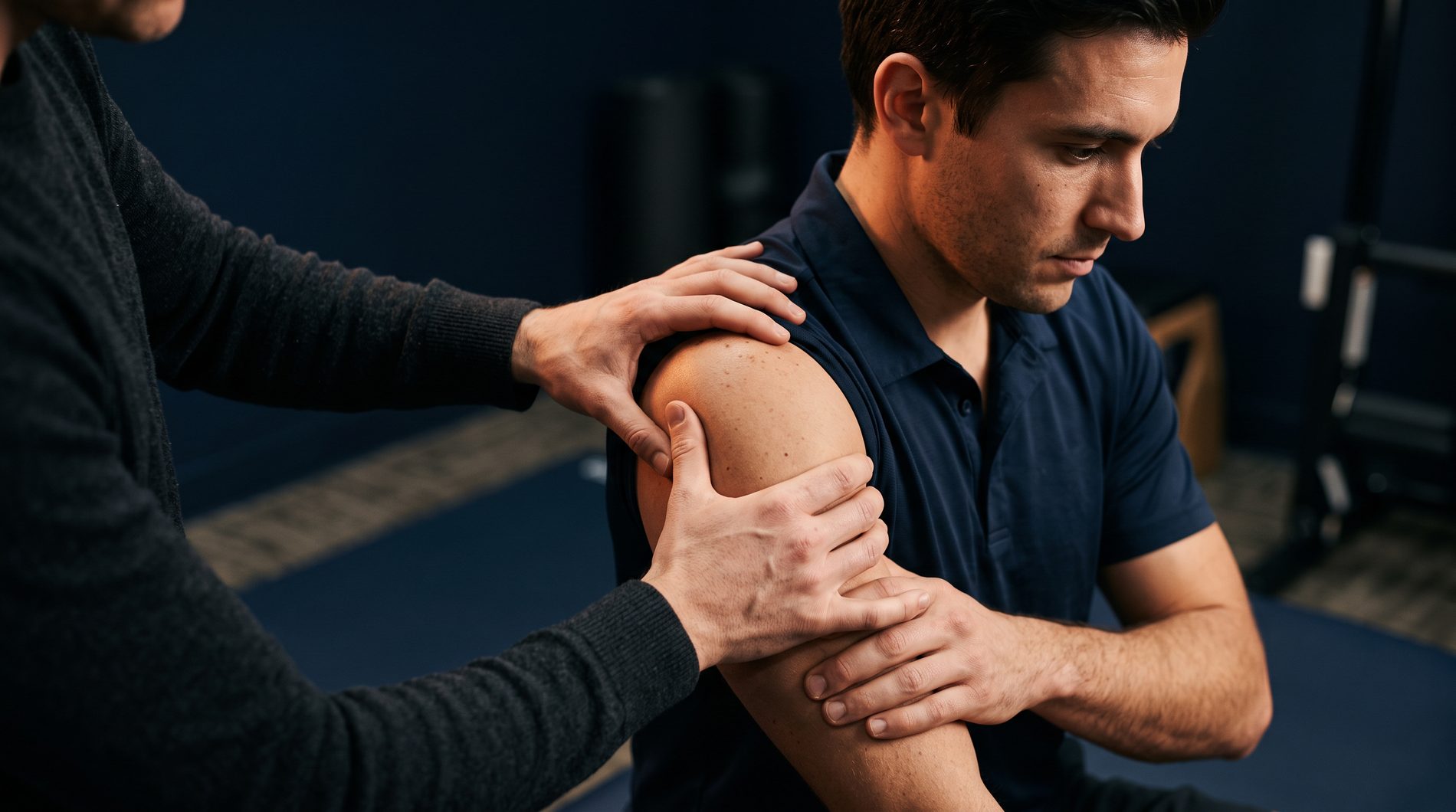
Behind every dashboard is skilled, hands-on expertise — assessment employees trust, and insight organisations can act on.
You do not need to commit your entire workforce. We begin with a selected employee group and run a structured pilot over 8–12 weeks (10 weeks by default), built around your roles, locations, working conditions and existing frameworks.
You then hold real information from your own workforce — and decide what happens next on evidence, not opinion.
Discuss a Pilot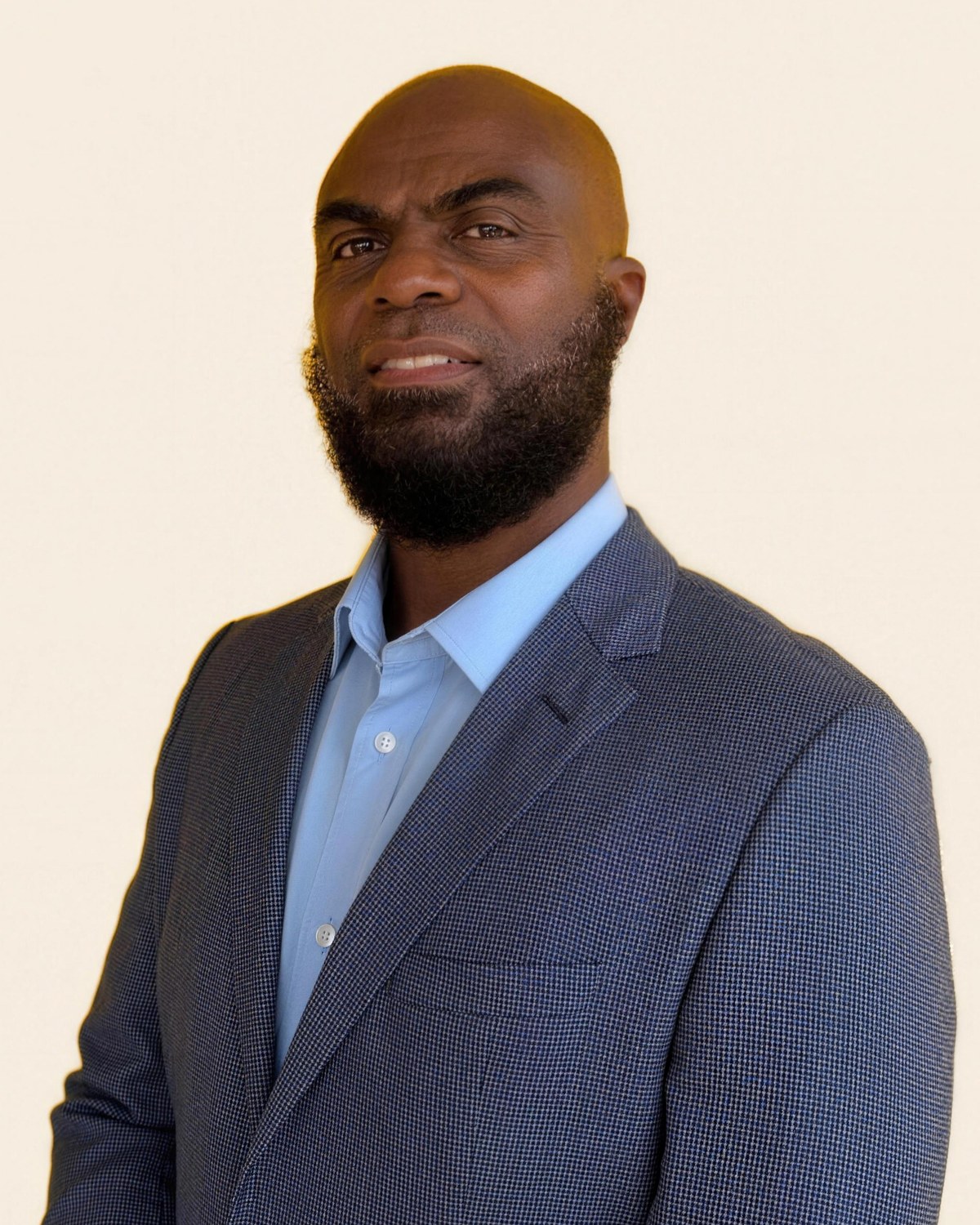
For more than a decade, Akil Ali has worked with people to answer one fundamental question: what can the human body actually do — and where is it beginning to lose capacity? His background spans movement assessment, joint health, strength and conditioning, mobility, martial arts, coaching and physical performance.
After years of working directly with individuals, he began seeing the same problem at a far larger scale. Companies were investing heavily in wellbeing, ergonomics, healthcare and fitness — but held almost no objective information about the actual physical capacity of their workforce. MR-CAS was created to close that gap.
Today, through Akil Ali Consulting Partners, he works with organisations to identify physical-capacity limitations earlier, build more resilient employees, and give leadership clearer information to govern the physical health of their workforce.
Functional Range Systems® Specialist · FRCms · FRA · Kinstretch · Strength & Conditioning · Human Performance
MR-CAS engagements are delivered by a small senior bench. Every assessment, interpretation and report is reviewed by a qualified practitioner before it reaches a client.
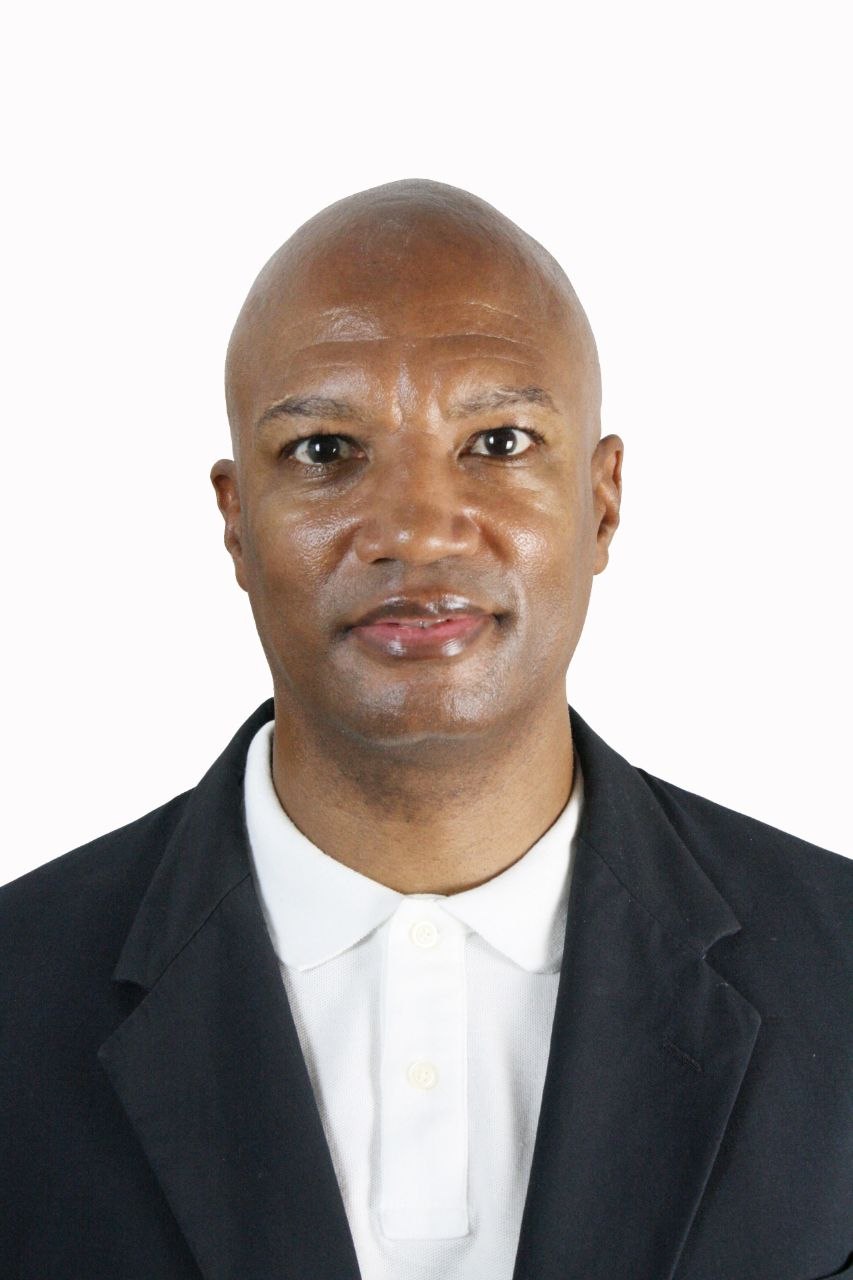
Samuel Fitz brings thirty years of executive safety and emergency-response leadership to organisations whose operations depend on their people. A former U.S. Army Special Operations Medic, Director of Safety for the U.S. Department of Defense’s Pacific Region and FAA-licensed commercial pilot, he has built and led emergency-preparedness and accident-mitigation programmes for military commands and international corporations reaching more than 150,000 personnel.
As Multi-Site Safety Manager and Senior Safety Advisor across Amazon’s U.S. Fulfillment and EU Prime Air networks, he designed and launched large-scale injury-mitigation initiatives — including a workplace safety programme projected to save USD 250 million annually in injury, treatment and workers’ compensation costs — and directed IATA-certified safety, compliance and mitigation programmes across nineteen international airports in nine countries.
Within MR-CAS he leads the governance side of the methodology: accident-causation analysis, pre-accident planning, liability-mitigation strategy and enterprise emergency preparedness — the organisational layer that turns individual capacity findings into board-level risk decisions.
Harvard Business School — Executive Education (OPM) · MSc Aviation Business & Safety (Summa Cum Laude, 4.0) · BSc Aeronautics — Aviation Safety & Project Management (Magna Cum Laude) · FAA Certified Commercial Pilot
No. MR-CAS assesses physical and movement capacity. It does not diagnose medical conditions, predict injury, or replace assessment by a regulated healthcare professional.
No. Exercise may form part of an intervention, but MR-CAS begins with assessment. We first identify where capacity is limited, then determine what support is appropriate — rather than offering the same programme to everyone.
No. MR-CAS complements those services and adds an earlier physical-capacity layer that sits in front of them.
Normally, no. Individual results stay confidential with the employee. Leadership receives anonymised workforce-level findings — unless a different process has been explicitly defined, consented to and legally approved.
Yes. Programmes begin with a selected cohort and expand across sites or employee groups when appropriate.
No responsible system can guarantee the prevention of all musculoskeletal injuries. MR-CAS identifies the factors that can be changed and supports better-informed preventative action.
The employee is directed to the appropriate occupational health, medical, physiotherapy or other regulated healthcare pathway.

MR-CAS gives organisations a practical way to see where their people are physically underprepared for the demands of their work — and what to do about it. Start with a small group. Measure what you find. Decide what comes next. Early visibility creates options; late recognition creates obligations.